


Spanish cuisine has long been trendy, and its wines are fast catching up.
Offering something different from the usual Cab-Sav blends and Pinot-centric wines of California and France, Spain has long free-wheeled from rich reds to vibrant whites.
| Related stories: |
| The World's Best Napa Wines of 2025 |
| The Best Italian Wines of 2025 |
| The World's Best Zinfandels of 2025 |
Versatile and food-friendly, the Spanish wine industry is shaking things up in a matter not unlike that other food revolutionary, the now-defunct El Bulli.
As Jancis Robinson reported, large numbers of Spanish vineyards and viticulturalists are producing wines with minimal intervention – lettings the grapes and terroir speak for themselves as much as possible.
However, all that being said, it must be noted that when it comes to Spain's top 10 wines, all of them are red, lurching from Tempranillo to that other great Spanish icon, Garnacha.
So although Spain does offer great variety, particularly in the white department, it would seem not enough to break into the top 10.
However, before we get into the top wines, it's worth going through our house rules.
First, it's worth noting that each wine is ranked by its critic score, and each score is an aggregation taken from our pool of critics who are each weighted according to their reputation.
Secondly, the price of each wine is listed in US dollars and is the global average retail price – or GARP – of each wine.



So leading the charge is the Viña El Pison from Artadi, a famous producer based in Rioja. The estate was founded as a cooperative by 13 growers in 1985 and was then purchased in 1992 by fourth-generation local winegrower Juan Carlos López de Lacalle.
Since then, the Artadi estate has gone from strength to strength, winning praise from various critics including Robert Parker. He scored the 2004 vintage of El Pison 100 points.
Unsurprising, then, it is our leading wine. The El Pison is 100-percent Tempranillo, and has an all-vintage high score of 97 points, and a price point of $341.
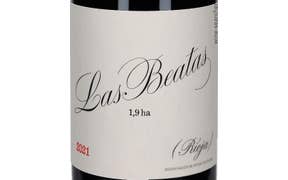
Number two is the Bodega Lanzaga Las Beatas by Compañía de Vinos Telmo Rodriguez, considered one of the country's leading winemakers.
The company was founded in 1994 with the specific purpose to create old bush-vine Garnacha wines from the Navarra region. Although the company has expanded into other styles and territories since, all vineyards continue to be farmed biodynamically.
The Las Beatas from Bodega Lanzaga in the Rioja is made up of nine local varieties, and is highly rated by the critics with an aggregate of 97 points. It also comes in at $334.
Three is the L'Ermita Velles Vinyes by Alvaro Palacios, one of Priorat's most famous winemakers. Palacios first established the winery in 1990 and has helped elevate Priorat to one of Spain's most sought after wine regions.
L'Ermita Velles Vinyes is a hundred percent Garnacha made from old vines. Since its initial release in 1993, it has become one of Spain's icon wines with a critic score of 97 points and price tag of $1146.
Four is the Pingus by Dominio de Pingus, one of the Ribero del Duero's top estates. It's flagship wine, Pingus was first made in 1995 and has become one of Spain's great cult wines after receiving glowing scores from Robert Parker.
Made from old vine Tempranillo, the Pingus is then aged in oak barriques. The resulting wine has an aggregated score of 97 points, and a price tag of $1095.

Five is the Descendientes de J. Palacios La Faraona from the Bierzo region of northwest Spain. Founded in 1998, Descendientes de J. Palacios specializes in Mencia and is the result of a collaboration between the aforementioned Alvaro Palacios and his nephew, Ricardo Perez Palacios.
Unsurprisingly, Palacios' involvement has elevated the Bierzo region's reputation. La Faraona is a pure Mencia made from very old vines with an aggregated score of 97 points, and a price point of $1273.
Six is the Sierra Cantabria Magico. Sierra Cantabria is largely based in the Rioja, and has built a stellar reputation for its Tempranillo wines. An old estate, the winery was initially founded as Bodegas Eguren in 1870 by the Eguren family and it is still run today in its new incarnation by Marcus Eguren.
The Magico is a Riojan blend made up predominantly of Tempranillo that repeatedly scores well with the critics and has an aggregated score of 96 points, at a price-point of $659.
Seven is the Clos i Terrasses Clos Erasmus from Priorat. Clos Erasmus is an organic estate founded by Daphne Glorian, who now runs it with her husband, Eric Solomon. Initially, however, Glorian founded the estate with the help of René Barbier of Clos Mogador and the ever-pioneering Alvaro Palacios.
Since those heady days, the estate has now built a reputation for its heady Priorat Garnacha, winning serious praise from Robert Parker. The Clos i Terrases has a critic score of 96 points and an average price of $318.
Eight is the Terroir Al Limit Soc. Lda. Les Manyes. Again in Priorat, Terroir Al Limit has built a reputation on its Garnacha and Carignan, although whites are also made in smaller quantities.
The estate was founded in 2001 by German Dominik Huber and South African winemaker Eben Sadie, with Huber still running the estate today.
The Les Manyes is generally seen as their flagship Priorat wine, and is made from pure Garnacha. It has a critic score of 96 points and a price-point of $227.
Nine is the Dominio de Es La Diva in the Ribera del Duero, Dominio de Es focuses particularly on ungrafted vines from pre-phylloxera. The proprietor, Bertrand Sourdais, discovered these vines when he first arrived in the region in 1999.
Both biodynamic and made purely from ungrafted vines, La Diva is a Tempranillo blend with a critic score of 96 points.
Lastly is the Comando G Rumbo al Norte Navarrevisca Vino de la Tierra de Castilla y Leon. Comando G is based in the region of Castilla y Leon and – as the name suggests – the estate both pays homage to and focuses on wines made from Garnacha.
The Rumbo al Norte is a pure Garnacha and one of the fullest-bodied of Comando G's offerings. It has a score of 96 points, and an equally full-bodied price tag of $1131.
Now we have our top 10, let's see how they compare to last year's.
Back in 2024, it was Pingus that topped the charts, sliding into this year's fourth place since those heady days. Last year's number two - L'Ermita Velles Vinyes – is this year's number three, and so on and so forth.
In fact, it's worth noting that it's the second half of last year's list where it gets interesting – three of which have dropped off to be replaced by newcomers, the Magico, La Diva and Comando G.
Price-wise, the landscape has also shifted slightly with most wines seeing a slight increase from last year's prices.
With four out of the ten wines well over a thousand dollars a bottle, it looks like Spain might be contending with France and California when it comes to prices. After all, like the fox after the hare, high prices are seldom far behind trends.


